
80+ QR Code Statistics 2026: Adoption, Trends, and Marketing
QR codes have been hailed all over the globe as “the comeback kid.” These matrix barcodes take users virtually anywhere online when scanned with a smartphone’s camera or a scanning device.
The QR code dates back to 1994 but gained prominence in 2020 as the world switched to a contactless lifestyle during the COVID-19 pandemic.
There was a significant surge in QR code usage statistics during this period. The world discovered how QR codes could speed up daily transactions and promotions.
And now, six years after the last government-mandated lockdowns, one question remains: Are QR codes still relevant today?
These 80+ QR code statistics confirm that QR codes are here to stay.
Note: This article has been updated in October 2026 to reflect the latest QR code statistics, trends, and market data.
QR code statistics at a glance
|
Table of Contents
- QR code statistics at a glance
- What are QR codes, and how do they really work?
- How are they different from 1D barcodes?
- The beginning of the QR code journey
- By the numbers: QR code statistics overview
- Are QR codes still relevant in 2026?
- QR code scans reached 41.77 million in 2024—a 433% increase over the past three years
- QR code usage surges to 130.12 million scans in 2026
- QR code scans surged to 57% in 50 countries
- By 2031, the global QR code market will reach $33.14 billion
- Top 15 countries with the highest scanning activity
- 47% year-on-year QR code generation growth
- The most popular QR code solutions
- Overall QR code growth
- 80+ QR code statistics, facts & insights you should know
- Why are QR codes popular?
- How top brands are using QR codes today
- How does the world use QR codes today?
- QR codes in the news
- How long will QR codes stay relevant?
- Questions people ask about QR codes
- The future of QR codes
What are QR codes, and how do they really work?
QR codes, or quick response codes, are two-dimensional barcodes that can contain various information. They’re smart optical data carriers that can store links, files, images, audio, videos, and more.
Using a QR code generator online, you can easily convert data into a smartphone-scannable code for instant access and easy information sharing.
Due to advancements over the years, these tiny pixels facilitate various transactions, such as payments, website access, mobile-first advertising, and more.
QR codes don’t require special equipment. Take your smartphone out of your pocket, scan them using the camera or QR scanner apps, and the information appears at your fingertips.
How are they different from 1D barcodes?
There are different barcode types that exist. Among the 13 common barcodes, UPC codes (1D barcodes) and QR codes (2D barcodes) are the most popular.
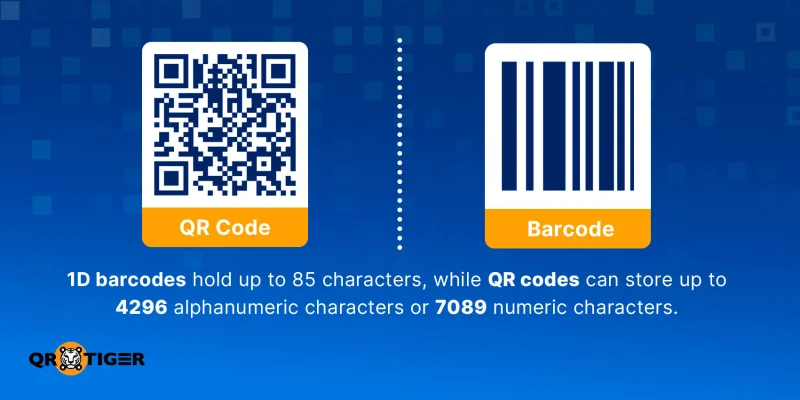
Traditional 1D barcodes are linear barcodes holding up to 85 characters. Since they are linear, they can only be read from left to right.
Meanwhile, 2D barcodes, like QR codes, can hold up to 4,296 alphanumeric characters and 7,089 numeric characters, which is equivalent to 2,953 bytes of data. That’s a lot more capacity than the usual 1D barcode.
QR codes are also omnidirectional. You can scan, read, or decode them using your smartphone in any direction.
The beginning of the QR code journey
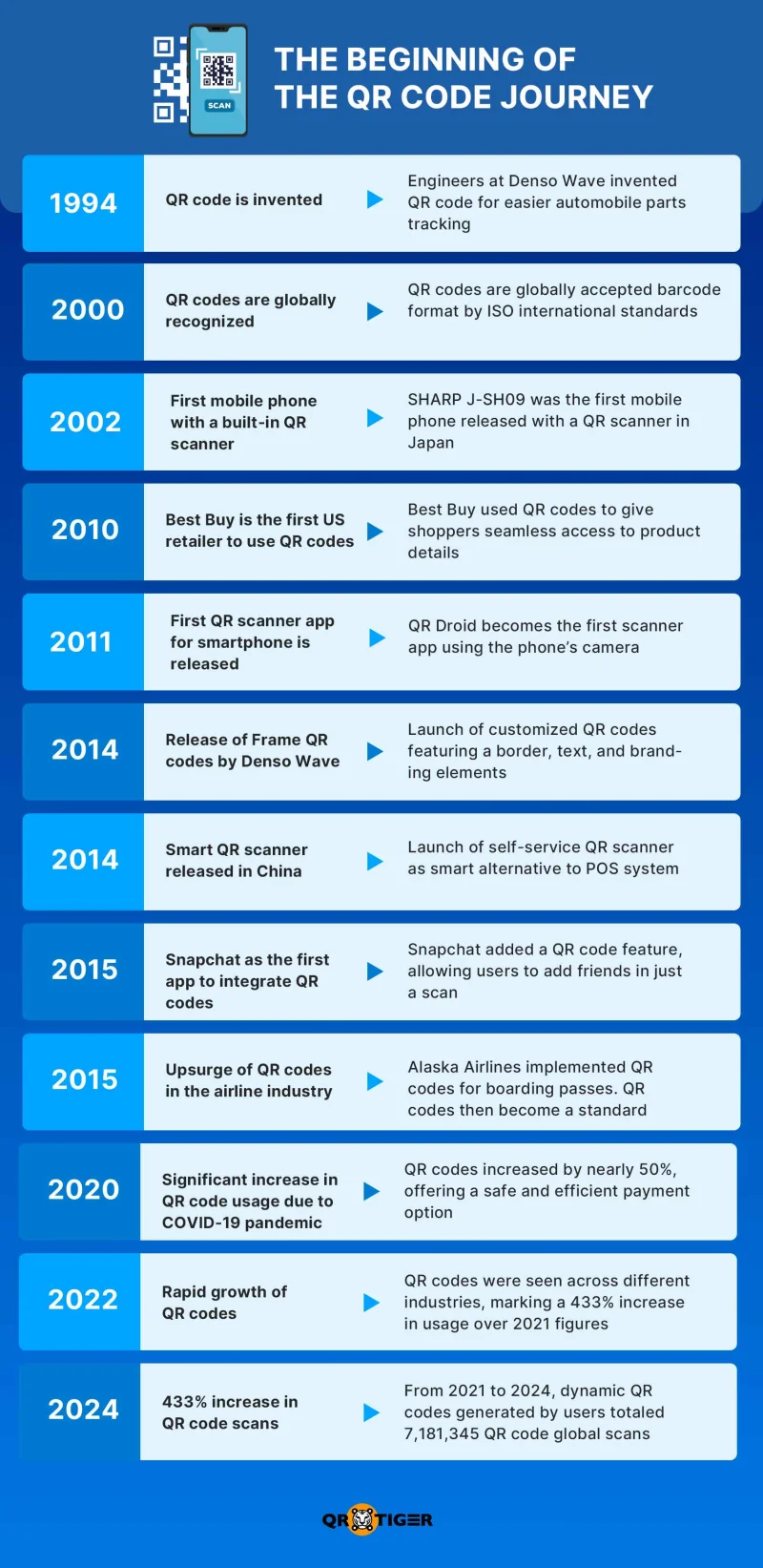
It all started in 1994 when a Japanese team at Denso Wave was tasked to create a barcode for easier automobile parts tracking during manufacturing and production.
These ingenious QR codes aimed to surpass the constraints of traditional barcodes by offering more data capacity and faster readability.
In 2000, QR codes were recognized by the ISO International Standards, establishing them as a globally accepted barcode format. This opened the door to widespread adoption across industries.
The first mobile phone with a built-in QR code scanner was invented in 2002. That’s the SHARP J-SH09, which was released in Japan. Third-party QR code reader apps then emerged, making scanning accessible to everyone.
About a decade later, 4G cellular technologies arrived, paving the way for faster mobile internet access. This also accelerated more user-responsive technologies.
The first notable advancement of QR codes occurred in 2010 in the US. Best Buy, an electronics retailer, used QR codes to give shoppers easy access to product details.
Following that breakthrough was the appearance of the QR Droid by Android in 2011. The scanner app uses the phone’s camera to decrypt monochrome squares and lead users to the embedded content.
Other significant advancements came in 2014, notably with the release of Denso Wave's Frame QR codes. This pushed the integration of QR codes with design elements without compromising scannability.
Brand logos and decorative elements were added around standard QR codes. Marketing teams primarily used these to attract customers.
There was an upsurge in QR code usage when the airline industry started using them for boarding passes. Between 2015 and 2019, the number of boarding passes downloaded on mobile phones doubled from 0.75 billion to 1.5 billion.
The major turning point for QR codes occurred during the COVID-19 pandemic, when contactless payments became essential for implementing social distancing.
In 2020 and 2021, the versatility of QR codes increased by nearly 50% in the way customers used them to pay for goods and services without needing to touch cash or card readers.
Years later, QR codes were seen in marketing campaigns across multiple industries. Businesses use QR codes for promotions, website access, contactless menus, event ticketing, engaging customers in creative campaigns, and more.
By the numbers: QR code statistics overview
Are QR codes still relevant in 2026?
Yes, current trends in QR code usage reveal that they remain highly relevant in 2026. In fact, the data marks a 57% surge in global use in 2025.
As evidence, an increasing number of major brands utilize them, particularly in their marketing campaigns. They're gaining more attention across various industries, including entertainment.
QR code scans reached 41.77 million in 2024—a 433% increase over the past three years
According to a QR code statistics report from QR TIGER QR Code Generator, global scans reached 41.77 million worldwide across all channels.
Smartphone usage remains the primary catalyst behind the surge in QR code usage. In 2024, there are 4.48 billion smartphone users globally, with projections estimating 6.18 billion users by 2029, underscoring the expanding opportunity for mobile-based interactions.
From 2021 to 2024, dynamic QR codes generated by users accumulated a total of 7,181,345 QR code global scans, representing a 433% increase over the 2021 figures.
QR code usage surges to 130.12 million scans in 2026
QR TIGER’s new data from the 2026 statistics report shows QR code scans jumped to 130,115,528 worldwide, up by 211.5% from 2024.
Statista also revealed that smartphone mobile network subscriptions worldwide reached almost 7.3 billion in 2025, and are projected to grow beyond 7.9 billion in 2028.
QR code scans surged to 57% in 50 countries
QR code scans across 50 countries rose to 57%, signaling its widespread adoption worldwide.
According to GWI's Q2 2024 survey, 50.5% of adult internet users worldwide scanned a QR code in the prior month.
By 2031, the global QR code market will reach $33.14 billion
The global QR code market is expected to reach $33.14 billion by 2031.
In 2025, the market was valued at $13.04 billion and will grow further to $15.23 billion in 2026. With a CAGR (compound annual growth rate) of 16.82%, it will reach the expected value in no time.
Dynamic QR codes take 64.92% of the QR code market share, and have a CAGR of 17.27% through 2031.
Regarding regional market share, the Asia-Pacific region remains the largest, accounting for 37.59% of the QR code market.
Top 15 countries with the highest scanning activity
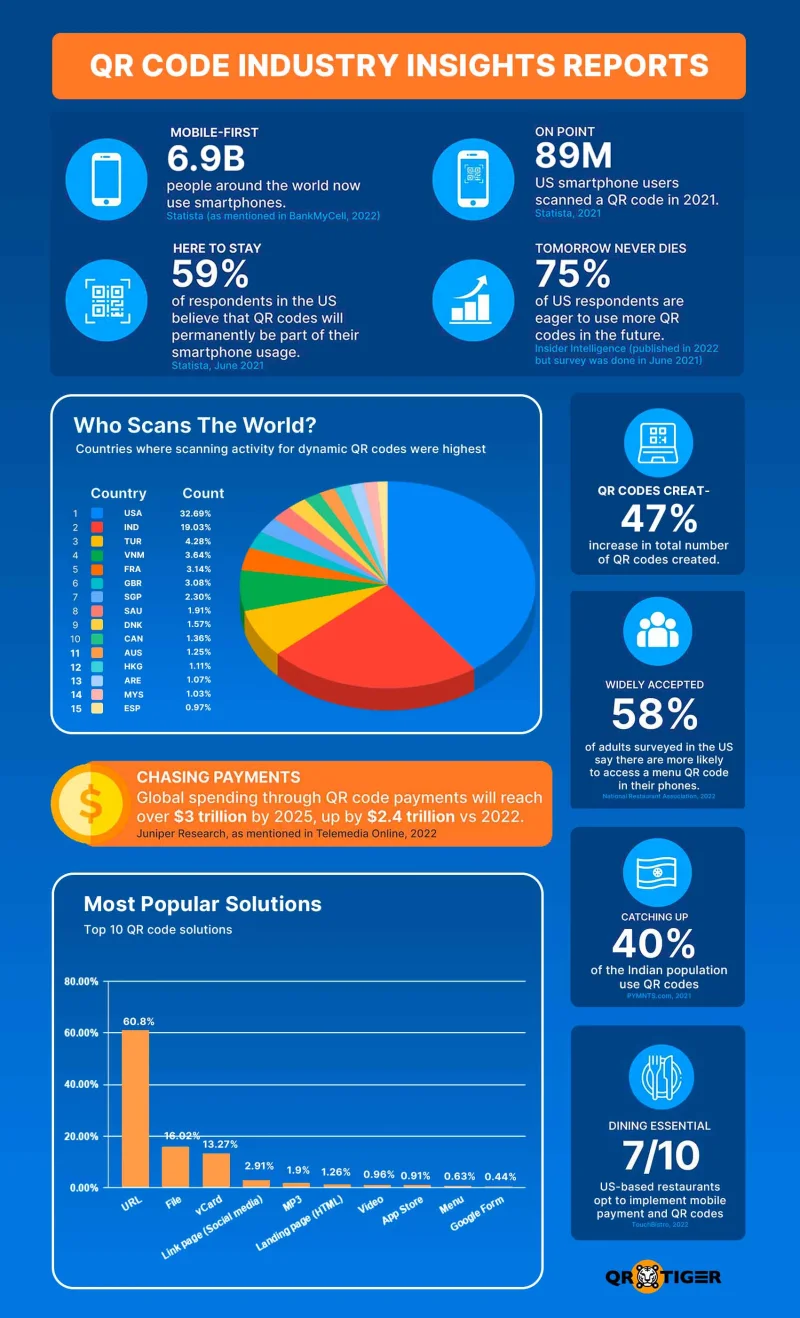
Based on QR TIGER’s database, here are the top 15 countries with the highest scanning activity in 2026:
- United States – 32.69%
- India – 19.03%
- Türkiye – 6.16%
- Vietnam – 5.18%
- France – 2.91%
- United Kingdom – 2.22%
- Singapore – 2.04%
- Saudi Arabia – 1.93%
- Denmark – 1.72%
- Canada – 1.52%
- Australia – 1.45%
- Hong Kong – 1.43%
- United Arab Emirates – 1.23%
- Malaysia – 1.20%
- Spain – 0.93%
Benjamin Claeys, QR TIGER founder and CEO, however, clarifies: “We can see that most of our customers come from the United States, but that doesn’t necessarily mean that they’re not used in other countries.”
“I think there are many other countries where QR codes are used a lot.
They might use a lot of static QR codes instead of dynamic ones. I do believe QR codes are definitely happening everywhere right now.”
47% year-on-year QR code generation growth
Along with the surge in QR code scans, there has been a notable rise in QR code generation, marking a 47% increase year-over-year across all countries.
Eight QR codes are generated per minute, representing a significant rate of QR code generation.
The most popular QR code solutions
Based on QR TIGER’s new QR code statistics report, here are the 10 most widely used QR code solutions:
- URL – 60.8%
- File – 16.02%
- vCard – 13.27%
- Link page (Social media) – 2.91%
- MP3 – 1.9%
- Landing page (HTML) – 1.26%
- Video – 0.96%
- App Store – 0.91%
- Menu – 0.63%
- Google Form – 0.44%
From the QR code usage statistics shown, 60.80% of the total QR codes created using a custom QR code generator online are URL QR codes, which only makes sense since QR codes are primarily used for redirecting users to web links.
File QR code comes in second place with 16.02%, followed by the vCard QR code (digital business card) solution at 13.27%.
The remaining 0.9% consists of the following QR code generator solutions:
- Location
- Youtube
- Smart URL (or Multi-URL)
- Meta (Facebook)
- Tiktok
- X (Formerly Twitter)
Smart URL (Multi-URL QR code)
Multi-URL QR codes, also known as Smart URL QR codes, are among the unique solutions. Using this solution, each user can access different links depending on particular parameters such as:
- Location
- Number of scans
- Time
- Language
- Geo-fencing (location-based access control)
Claeys remains steadfast in the potential of multi-URL QR codes. “We recently helped VeeFriends, an NFT project by Gary Vaynerchuk,” he shares.
“They needed a multi-URL QR code solution that would generate a different link every time a user scanned it.”
“I do believe that our multi URL QR code would become more and more popular, together with the advanced features of our dynamic QR codes,” Claeys adds.
Overall QR code growth
- Rapid QR code usage: QR code scans surged by 57% in 50 countries.
- Uptrend QR code scans: 26.95 million scans were recorded worldwide in 2022-2023.
- Increased QR code scans in 2024: Dynamic QR scans reached 41.77 million in 2024, a 433% increase over the past three years.
- Forecasted growth: A 22% increase in usage is expected across different regions by 2025.
- QR code surge in 2026: Global scans reached 130.12 million, a 211.5% increase over 2024.
- QR code generation rate: Eight QR codes are generated per minute.
- Yearly QR code growth: 47% year-on-year QR code generation growth.
80+ QR code statistics, facts & insights you should know
QR codes are more than a way to access websites. Here are some cool facts and general statistics you must know:
Part 1: General QR code statistics overview
QR code generation rate: Eight QR codes generated per minute
Today, eight customized QR codes are created every minute, a clear evidence of the upsurge in the use of QR codes.
QR TIGER’s QR code trend report revealed a 47% annual growth in QR code generation.
More brands, such as Hershey’s, Pepsi, Burger King, and McDonald’s, are embarking on their QR code journey.
Currently, there are more than 20 need-specific QR code solutions available online. This allows businesses to use QR codes for various purposes.
60.8% of QR code users use URL QR codes
Based on QR TIGER’s full QR code statistics report, a URL QR code is the most in-demand QR code solution globally, with a 60.8% share of the pie.
Meanwhile, the File QR code (16.02%) and vCard QR code (13.27%) come in second and third place, respectively.
47% of users scan QR codes daily or several times a week
QR TIGER's QR Decoded 2026 report, based on a global survey of 1,548 respondents, found that 47% scan QR codes daily or several times a week. Another 15% scan once a week.
QR code usage isn't slowing down either. About 70% of respondents say they use QR codes more often now than in 2023. Only 6% reported a decrease.
These numbers tell businesses one thing: QR codes aren't a phase. They're a habit.
Why do people scan QR codes?
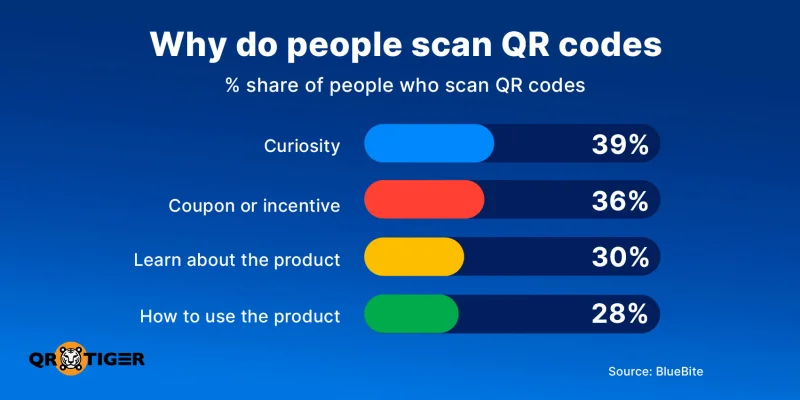
QR TIGER's survey revealed the top reasons people scan QR codes today:
- 55% scan for restaurant menus
- 44% scan for payments
- 40% scan for product information
- 38% scan to download an app
- 34% scan to connect to Wi-Fi
- 29% scan for discounts and promotions
- 24% scan for ticketing and events
Restaurant menus and payments dominate. People associate QR codes with convenience and speed, not novelty.
QR codes with logos and call-to-action get 70% more scans
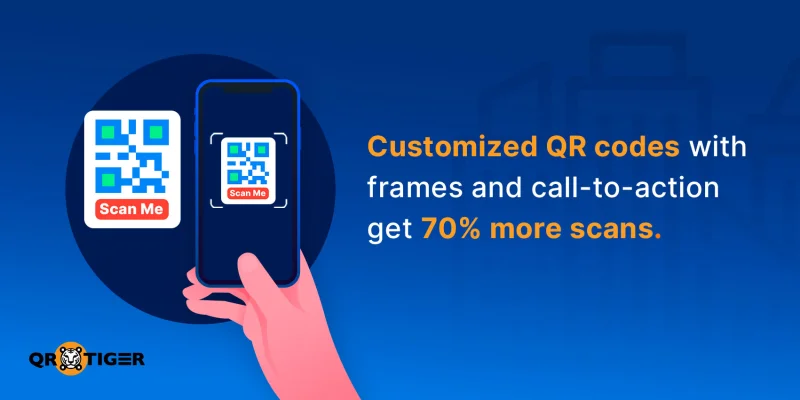
QR code experts claim that customized QR codes are 70% more effective than generic, standard-looking QR codes. QR TIGER’s 2026 survey confirms this.
When asked which QR code style they trust most, 35% chose black-and-white with a logo. Another 32% chose colored with a logo. Only 14% said they trust QR codes without any visual cues.
The logo and colors add identity to QR codes, which attracts more scanners. They easily know where they come from and add a sense of security to the scanners. Trust is what gets people to scan.
A call-to-action (CTA) also provides clear direction on how to use your QR code, which is helpful for those unfamiliar with this technology.
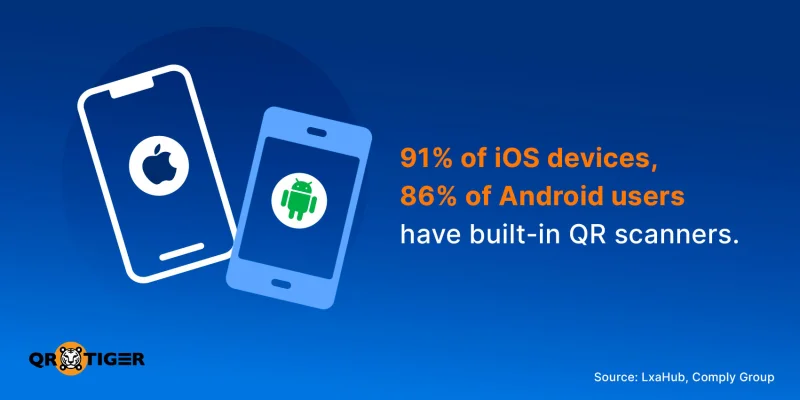
91% of iOS devices and 86% of Android users have built-in QR scanners
Back in 2002, the first mobile phone with QR code scanning hit the scene, but widespread adoption didn’t happen until the late 2010s.
In 2018, Apple introduced a built-in scanner for iPhones, and Android 9.0 followed suit.
A whopping 91% of iPhone users have models from 2017 onward, all coming with a built-in scanner. Eighty-six percent of Android users with OS 9.0 or higher also have a built-in QR scanner, courtesy of Google Lens.
48% of Americans use QR codes several times a month
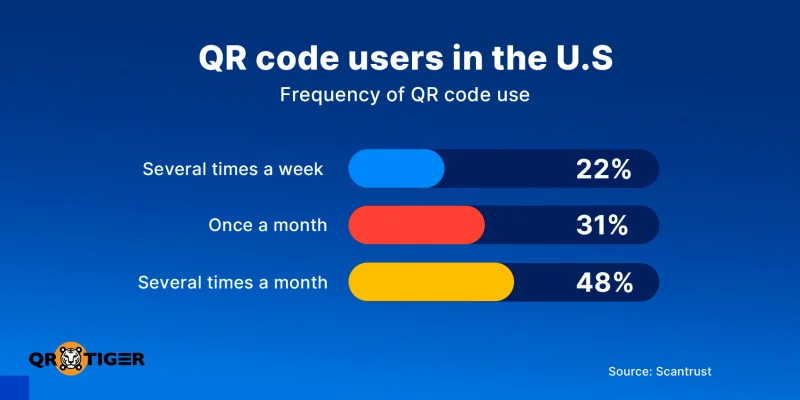
Statistics from Scantrust revealed that most Americans use and scan QR codes.
Forty-eight percent use and scan QR codes several times in a month. Meanwhile, 31% use them once a month, and 22% use them several times a week.
This report clearly shows that the majority of respondents engage with QR codes on a weekly or monthly basis. These numbers tell us that QR codes have become a mainstream tool.
That’s why it’s crucial for businesses to adapt this technology to cater to QR code user consumers.
102.6 million Americans will scan QR codes in 2026
An estimated 102.6 million smartphone users in the United States scan QR codes in 2026, up from 99.5 million in 2025, per eMarketer. That figure was 89 million in 2022, showing steady year-over-year growth.
A 2024 Team Lewis survey backs this up: 68% of US adults reported using a QR code in the previous year. These numbers confirm QR codes have become a mainstream tool in the US.
80% of US users trust QR codes
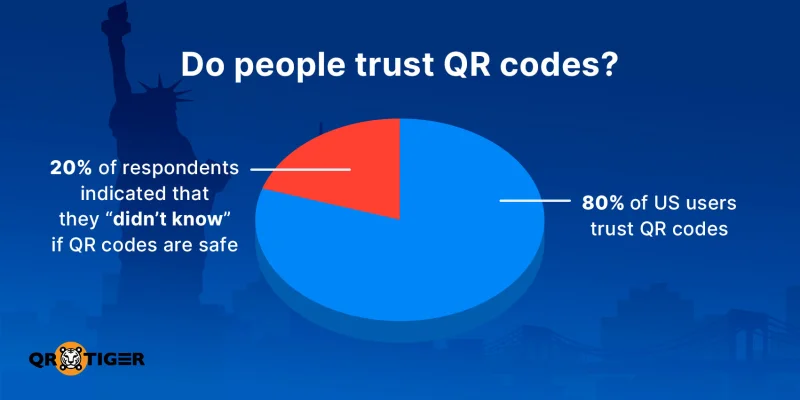
Approximately 80% of US users believe QR codes are safe to use.
Meanwhile, about 20% are unsure if QR codes are safe or not. This tells us that there's uncertainty among a portion of the public.
To close this gap, businesses should rely on a secure QR code generator to create customized, branded, and secure QR codes.
70% of users have a positive view of QR codes
QR TIGER’s 2026 report found that 70% of respondents across the US, Europe, and Asia Pacific view QR codes positively. Another 23% feel neutral. Only 6% hold a negative view.
Trust boosters include content previews (48%), verified branding (42%), and official logos (38%). On the flip side, 40% cite security concerns as the main reason they don’t scan.
What stops users from scanning QR codes
Security isn't the only barrier. QR TIGER's survey found that 19% skip scanning due to inconvenience, while 15% don't see enough value in the content.
Location also matters. About 53% of users skip scanning QR codes found in emails or messages. Another 47% avoid them in public bathrooms, and 46% skip random flyers or posters.
Scanning rates rise when the environment feels controlled and the purpose is clear. Products and stores (65%) and restaurants (59%) are the top locations where people feel comfortable scanning.
63% of users will scan QR codes when the value is clear
QR TIGER's survey found that 63% of users will scan a QR code when the benefit is immediately obvious.
Their top motivations: 55% scan to save time, 49% scan to access information, and 45% scan to save money.
Without a clear incentive, trust depends heavily on placement and familiar visual design.
Part 2: QR code upsurge in COVID-19
QR code downloads surged during the pandemic
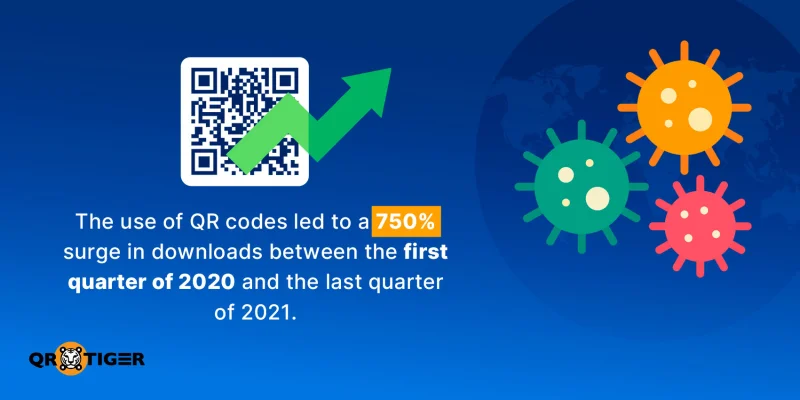
In the first quarter of 2020 and the last quarter of 2021, we saw a 750% increase in downloads prompted by QR codes.
Businesses embraced QR codes to create interactive experiences, give additional product information, and share coupons. Its use has even transcended education, logistics, entertainment, and more, further driving its popularity.
Heightened use of QR codes remained after the pandemic
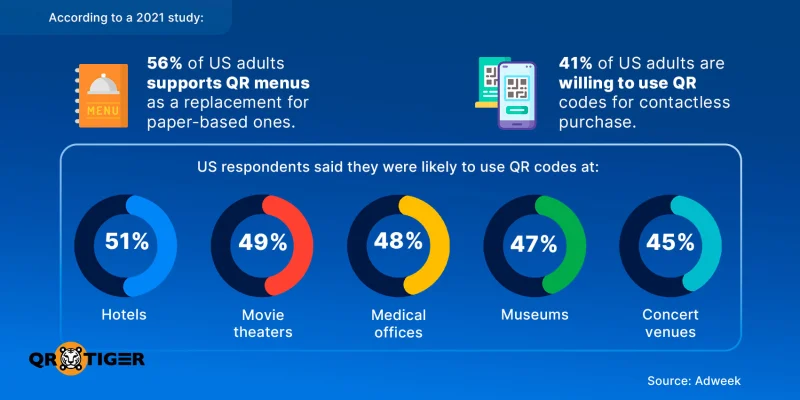
The general public has expressed a willingness to continue using QR codes even after the pandemic ended.
Restaurants, businesses, public institutions, and governments used QR codes for diverse objectives, increasing their widespread exposure. This normalized the use of QR codes beyond immediate pandemic needs.
Asia led QR payments during the COVID-19 pandemic
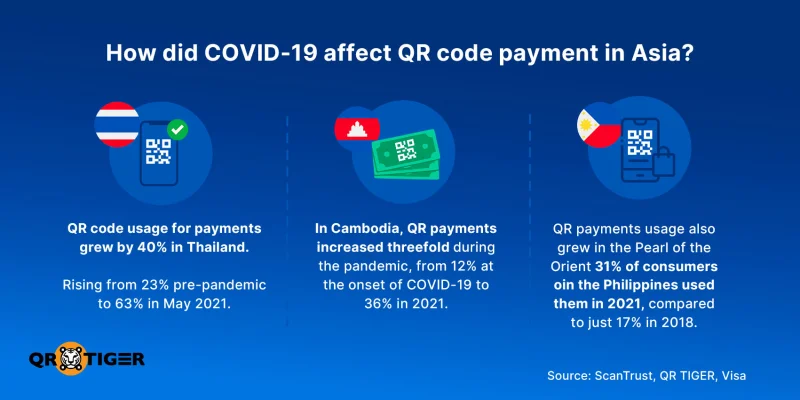
Many Asian governments actively incorporated QR code payments to reduce the use of cash and contact-based transactions.
QR codes offered a touchless alternative to cash and cards, fitting perfectly with health concerns during that time.
The pandemic significantly accelerated the use of QR codes, particularly in countries such as China, India, and Singapore, with both value and volume experiencing strong growth.
The rise and growth of QR code-related search volume during the pandemic
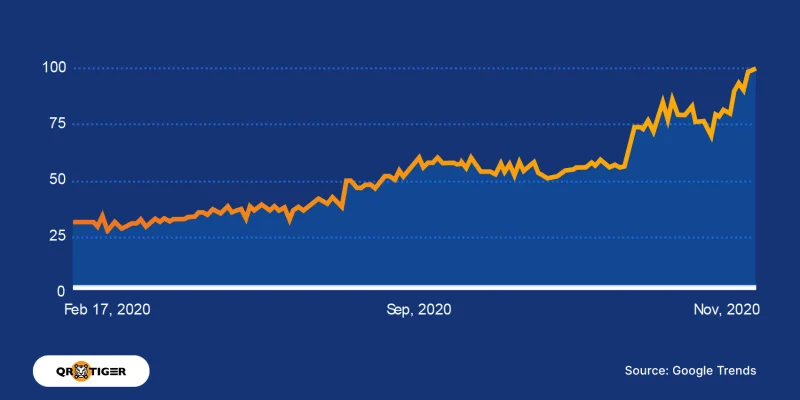
The rising trend of QR codes has significantly contributed to their popularity during the COVID-19 pandemic.
Businesses showed interest in this advanced tool, which established a demand for touchless solutions to minimize physical contact.
Popular QR-related searches include “health QR codes” and “QR menu,” fueling its adoption. QR codes were used for vaccination certificates or health passes, offering contactless ordering and payment.
Verification of EU digital COVID-19 certificates using QR codes
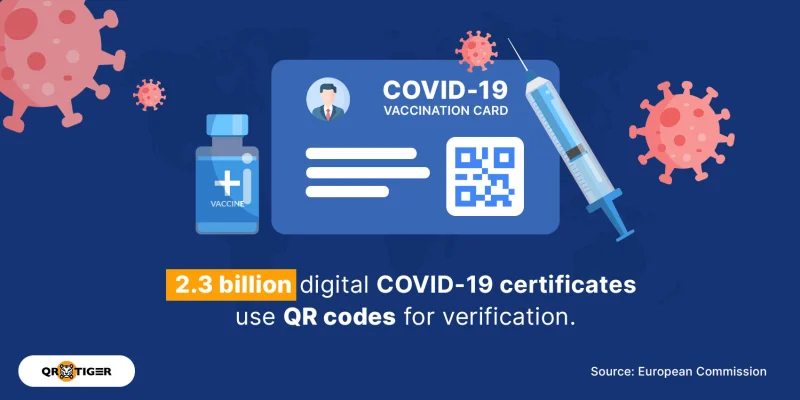
The EU Digital COVID Certificate (DCC) stored a citizen's vaccination or test status inside a QR code. More than 2.3 billion of these certificates were issued, facilitating safe travel across Europe during the pandemic.
Each DCC QR code was digitally signed by the issuing authority's private key. Border agents or venues scanned the code and verified its authenticity through the EU's trust framework (Public Key Infrastructure).
This secure barcode-based credential became a global model for health certificates. Over 50 countries adopted the EU's QR format as a standard.
Part 3: QR code usage around the world
QR code scans quadrupled in 2024, reaching 41.77 million scans globally
According to QR TIGER’s latest statistics reports, global scans quadrupled in 2024, reaching 41.77 million. Dynamic QR codes created by users garnered 7,181,345 scans.
This heightened number of scans across the globe tells us that more and more people are positive toward QR code technology.
QR code scans jump to 130.12 million, a new record in 2026
This shows a real behavioral shift. QR codes are no longer a backup option. They have become a normal way to access information, whether it is on a product, a poster, or payment terminal.
For businesses, this means the physical world is now part of the digital journey, and every scan is a chance to engage and convert.
People don’t scan by accident, so the traffic is more meaningful and often more likely to convert. QR codes are now a core channel.
95.7% of Chinese users prefer the QR code payment method
QR codes play an integral part in China’s daily life. Their integration with super-apps like WeChat and Alipay makes processing transactions convenient.
GWI and Data Reportal data shows that 67.4% of China's population scans a QR code monthly, the highest adoption rate globally. Malaysia (66.1%), Thailand (61.5%), Argentina (61.0%), and Brazil (60.8%) follow close behind.
This growth has led to built-in QR code scanners in their messaging apps. Using smartphones, users can quickly scan a merchant’s QR code and pay for goods and services.
Besides payment processing, the widespread adoption of QR codes in China has enhanced e-commerce and improved information access.
Chinese QR codes were scanned 113.6 million times in just one month
When we talk about QR codes, China is often hailed as the catalyst for the growth of this technology. Although Japan was the first to introduce QR codes, China was quick to catch on.
Far back in 2013, they were already heavily using QR codes. In just one month, 113.6 million QR scans were recorded in China alone.
Chinese users engage with QR codes 10-15 times a day
For decades, QR codes have been the norm in China. They’re basically everywhere; transportation, education, food, housing, clothing, and entertainment.
According to GoClick China, estimates indicate that Chinese users engage with QR codes 10-15 times daily.
At this rate, it’s no wonder that QR codes are ingrained in their daily lives and will continue to be a common feature worldwide.
Significant increase in QR code usage across Latin America
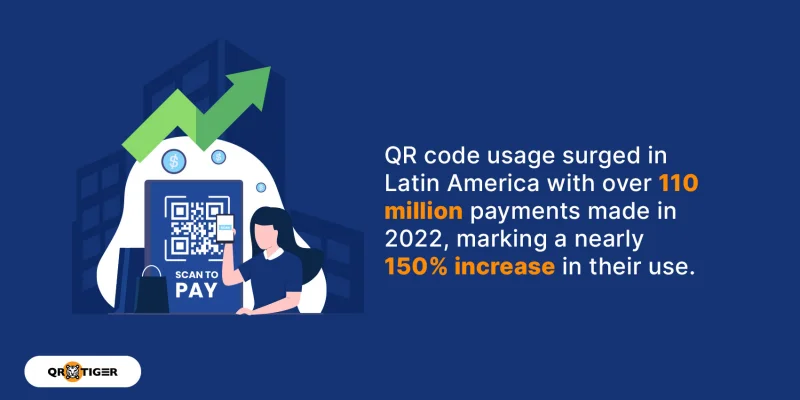
Latin America has undergone a significant transformation in its payment landscape, with over 110 million QR code payments made in 2022. Mercado Pago, the largest online payment platform in the region, spearheaded this effort.
This partnership has been instrumental in promoting contactless payments, resulting in a nearly 150% increase in the use of QR codes in 2022. Latin America's QR code payment landscape is expected to continue advancing in the coming years.
82% of US consumers say QR codes will become a permanent part of using their phones
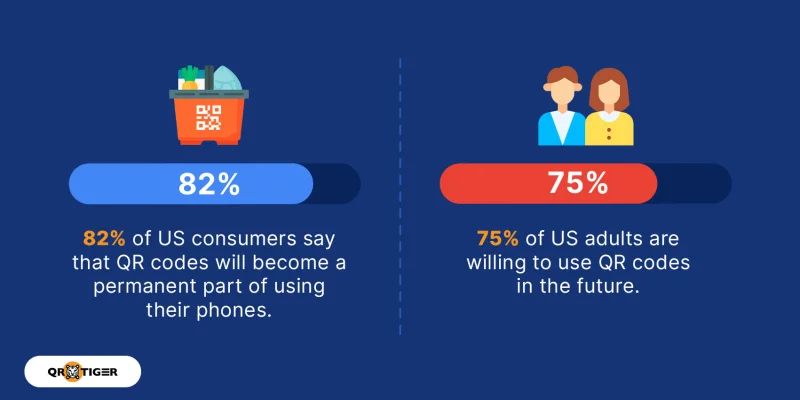
Approximately 95% of consumers are familiar with scanning QR codes. Most US consumers aged 18-44 strongly agree that QR codes will remain a permanent part of their daily lives.
Recent data from YouGov and The Drum tells us that 75% of US adults are willing to use QR codes in the future.
Meanwhile, 64% of consumers older than 45 are willing to use them in the future, as they are less confident in the idea that QR codes will remain relevant in the coming years.
59% of US respondents believe QR codes will be permanent
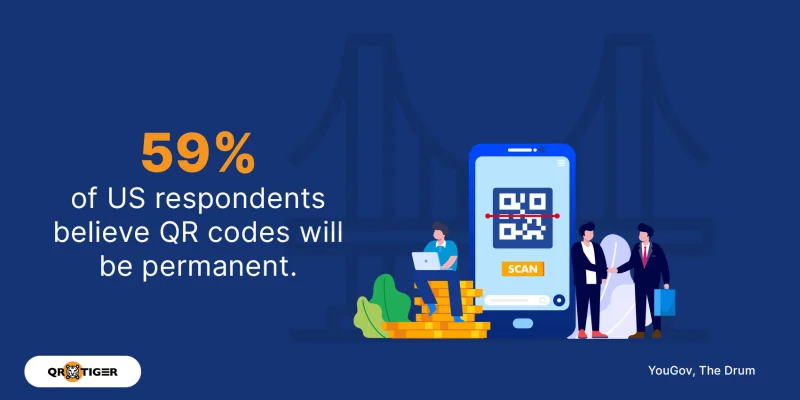
A June 2021 survey in the US by Statista revealed that 59% of respondents believe QR codes will become a permanent part of their smartphone usage.
This traces back to the continued and expanding use of QR codes across all dimensions of our daily lives.
Apart from payments, QR codes show up in product packaging, restaurant menus, digital business cards, ticketing, and even in real estate tours, all of which contribute to long-term value.
India places second, with a total of 1,101,723 scans
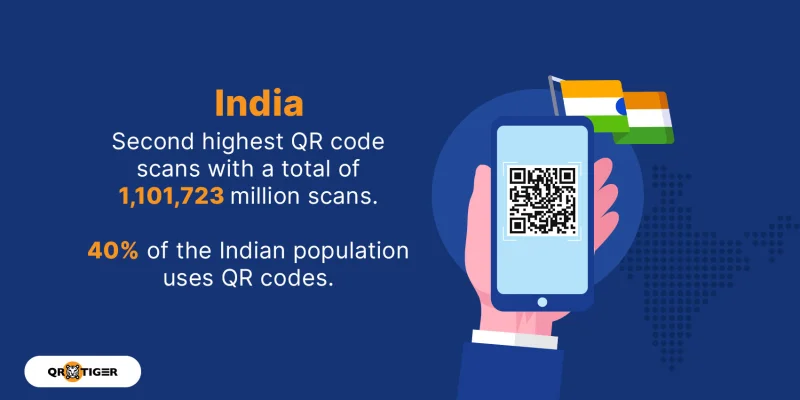
It’s no surprise that 40% of the Indian population is familiar with and are using QR codes.
The country has adopted QR codes on train tickets and even launched BharatQR, a QR code-based payment solution for digital person-to-merchant payments.
The Economic Times also revealed in an article that QR codes are present almost everywhere in India, from textile industries and restaurants to non-profit organizations.
Increased QR code adoption in France with a 51.14% upsurge
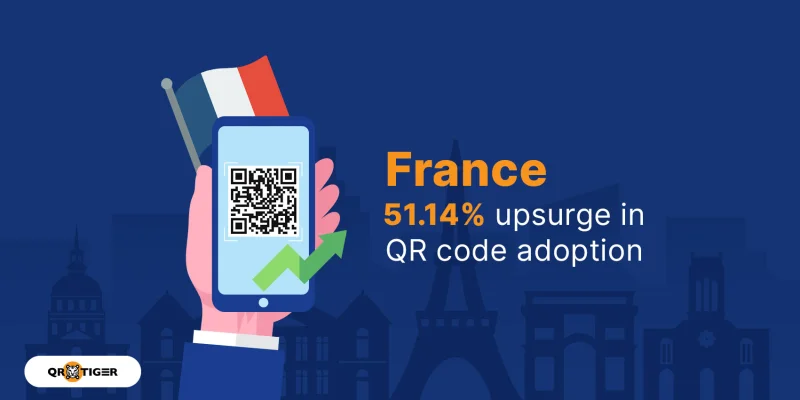
QR TIGER’s full statistics report clearly shows an upsurge in QR code adoption, with an aggregate four percent increase in scans across the globe.
France ranks third among the top countries with the most QR code scan frequency.
These numbers indicate that an increasing number of people in France are discovering the potential of QR codes. This is due to pandemic-related factors, consumer acceptance, and the versatility of the product across various industries.
Dynamic QR codes are the main QR code solution in France
In addition to continuing QR code adoption, French consumers have also chosen the top type of QR code solution: dynamic QR codes.
According to a Research and Markets report, the dynamic QR code market is expected to reach a value of $898.6 million by 2032, growing at a compound annual rate of 19.2%.
Germany dominated the European QR code payment market in 2024
The same Research and Markets report also found that the German QR Code Payment Market surpassed that of other countries in 2024, generating $707.2 million, reported by Grand View Research.
Research and Markets predicts that Germany will stay at the top until 2032 with a projected market value of $1.74 billion.
This dominance in Europe is thanks to QR payments being integrated with traditional debit systems.
Banks, with infrastructure and regulation from the Bundesbank and BaFin, have also added QR codes to account-to-account apps, enabling users to use pay-by-scan methods for their invoices and retail transactions.
61% of Japanese consumers have scanned a QR code
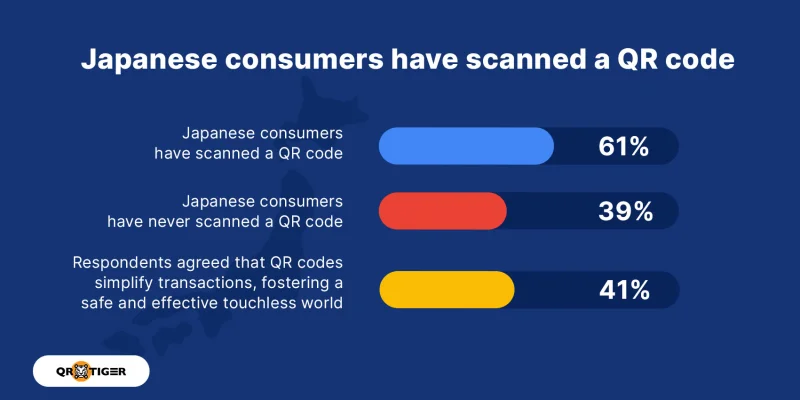
Although QR codes were invented in Japan nearly 30 years ago, 39% of Japanese consumers have never scanned a QR code.
Quite ironically, Ivanti’s 2021 study revealed that QR code usage is relatively low in Japan.
An interesting finding from their study: only 41% of the respondents agreed that QR codes simplify transactions and foster a safe, contactless world.
Part 4: QR code users by demographic profile
QR code scanning activity by age and generation
By the end of 2025, it is expected that 2.9 billion people worldwide will be using QR codes. But who exactly scans them? Let's break it down by age and generation:
- Generation Z (ages 14-29): Highest adoption, with 83% of them frequently using QR codes for payments, menus, and offers.
- Millennials (ages 30-45): Active users of QR codes, with 81% scanning them for work and personal routines.
- Generation X (ages 46-61): About 74% of adults in this bracket are open to scanning QR codes, though they scan less often than younger groups and prefer clear value.
- Boomers (ages 62+): Far fewer adults aged 62 and over regularly scan QR codes, with approximately 30-48% scanning them, depending on their comfort level and learning curve with the technology.
Upon examining these numbers, we can see that adoption rates vary across all age groups. Therefore, there is no single approach to using QR codes.
Understanding these differences helps you design more effective QR code experiences that align with user behavior.
Generation Z and millennials have the highest scan activity
Zooming in on the same dataset, the highest scan activity is clearly observed among Generation Z and millennials.
Team Lewis Research also reports that 49% of Gen Z and 51% millennial consumers use QR codes at least once a week.
Their adoption of the technology isn’t surprising at all. These generations grew up with smartphones, so scanning feels natural and effortless.
This behavior also explains why QR code-driven campaigns tend to perform best when targeting younger audiences.
57% female, 43% male are QR code users
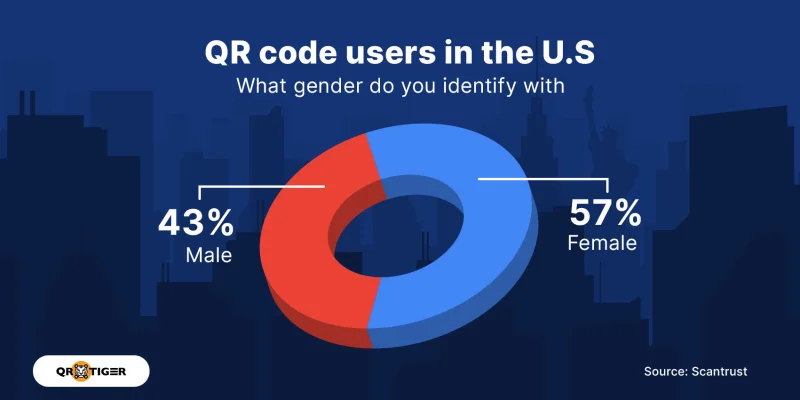
In a survey conducted in 2021, 57% of QR code users were female, and the remaining 43% were male.
Based on this finding, it’s clear that women are the primary users of QR codes. Several factors influence this, one of which is that women make 70 to 80% of purchasing decisions.
When adopting QR code technology, it’s essential to acknowledge this gender gap to establish more effective consumer connections.
Close to 54% of adults aged 35 to 44 scan QR codes every month
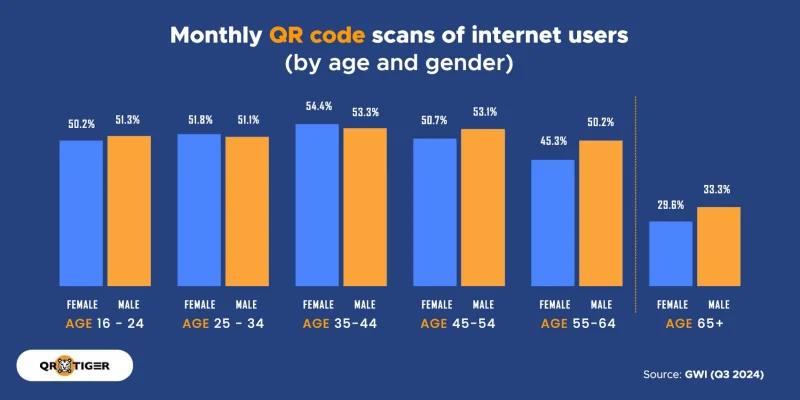
A 2025 report from We Are Social revealed that 54.4% of women and 53.3% of men aged 35-44 scan QR codes every month.
Their report also revealed the following:
- 50.2% of females and 51.3% of males aged 16-24 scanned QR codes
- 51.8% of females and 51.1% of males aged 25-34 scanned QR codes
- 50.7% of females and 53.1% of males aged 45-54 scanned QR codes
- 45.3% of females and 50.2% of males aged 55-64 scanned QR codes
- 29.6% of females and 33.3% of males aged over 65 scanned QR codes
QR code users by household income
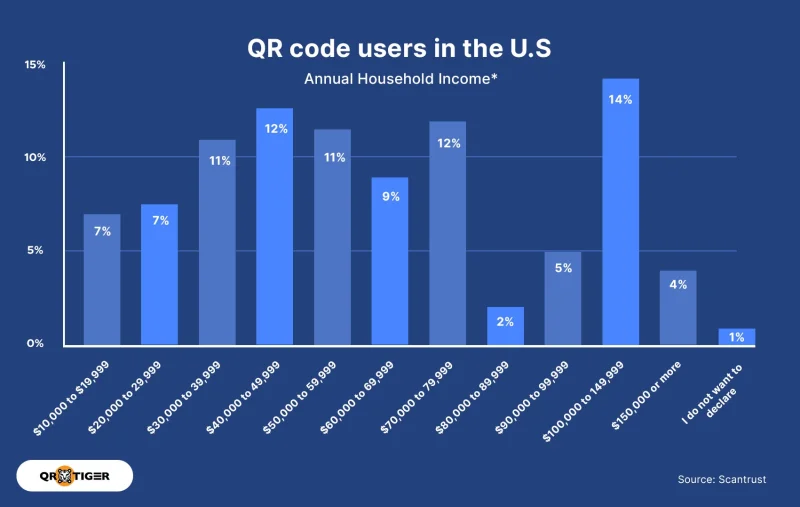
Interestingly, a study found a correlation between household income, smartphone choices, and the use of QR code technology.
A 2021 survey found that QR code users often earn between $30,000 and $80,000 annually. Surprisingly, many high earners who make over $100,000 annually don't use QR codes frequently.
Part 5: QR code usage by market & industry
Marketing and advertising obtained a 323% QR code usage growth
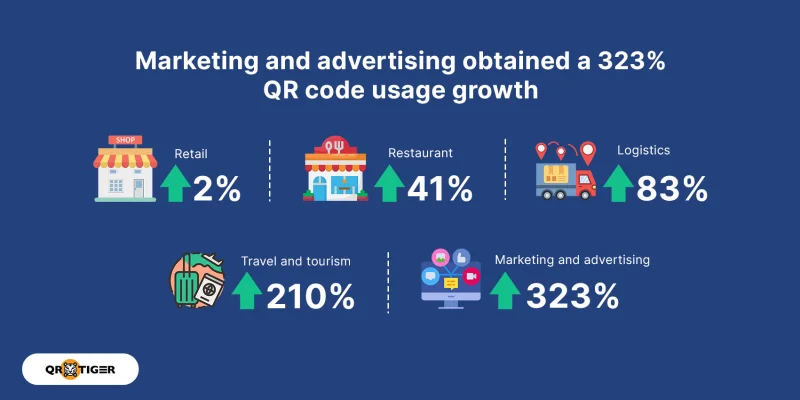
QR TIGER’s latest QR code trend report revealed the top 5 industries with the most QR code usage. Their QR code scan trend revealed the following industries with the most number of scans:
- Marketing - 23.75%
- Education - 13.23%
- Events - 7.88%
- E-commerce - 6.80%
- Culture - 6.57%
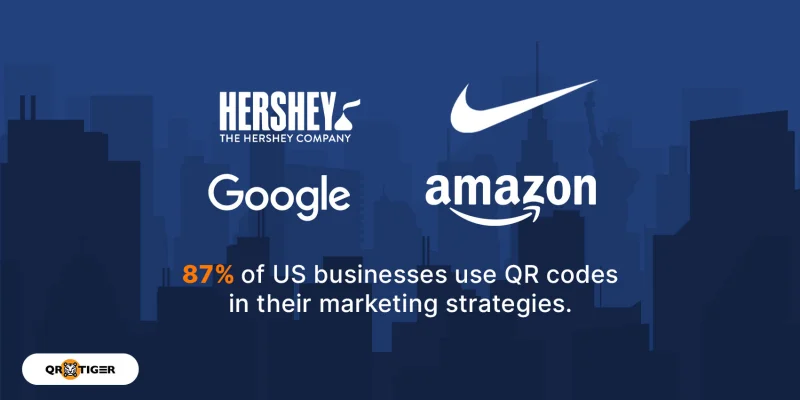
More than half of US businesses use QR codes for marketing
Brands love using QR codes in their ads because they make people feel more engaged. Instead of watching boring TV or online ads, you can actually interact with them by scanning the code with your phone.
For example, Vincle, a software company, put QR codes at events, which attracted a whopping 90% more people.
And check out PayPay from Japan, they gained 15 million new users in just 10 months by letting users sign up with QR codes.
Big industry players like Nike, Google, and Amazon are all about it too, using QR codes to get people excited and engaged.
88% QR code creation growth year-over-year in the CPG industry
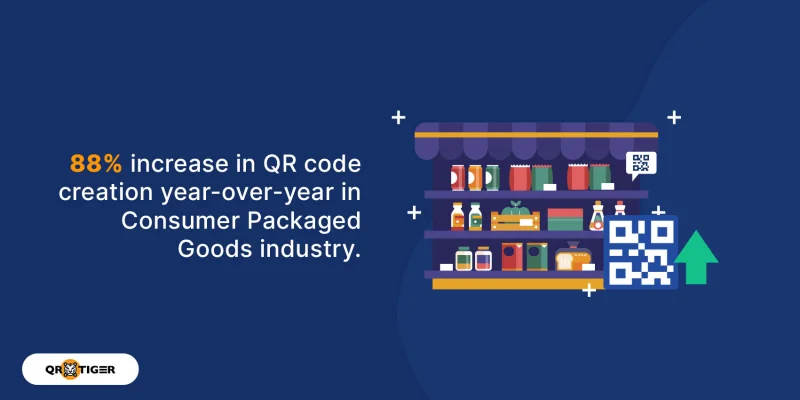
A recent 2022 analysis report revealed a significant 88% increase in QR code creation year-over-year in the Consumer Packaged Goods industry.
This upsurge suggests that businesses must heighten their focus on implementing QR-smart interactive packaging to enhance customer experiences and stay competitive in the market.
Hershey’s, for example, uses QR TIGER’s QR codes to spark consumers’ interest with their new Kisses chocolate packaging gimmick.
75% of consumers scanned a QR code on FMCG products
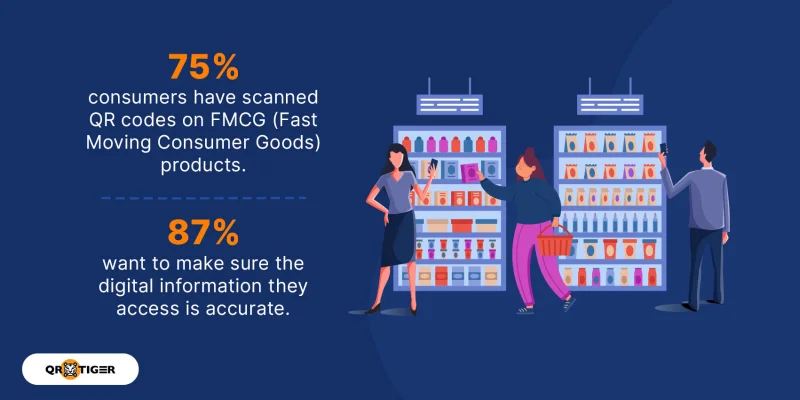
Based on a recent study by Appinio, a market research firm, 75% of consumers have scanned QR codes on FMCG (Fast Moving Consumer Goods) products.
Additionally, 87% of the study respondents want to ensure the accuracy of the digital information they access through QR codes.
This study proves how smart consumers are and why supplementary production information is crucial.
79% of shoppers prefer products with a scannable QR code
A 2024 GS1 US consumer survey found that 79% of shoppers are more likely to buy items with a scannable barcode or QR code that gives them the information they want.
The same study further found that 77% of consumers feel that having product information is important to their buying decision. QR codes on product packaging provide valuable information such as ingredients, sources, and sustainability practices.
This report's findings directly relate to the push for QR codes on product packaging using GS1 Digital Link. Many companies, including P&G, L'Oreal, and Nestle, have already started updating their packaging in preparation for Sunrise 2027.
36% of TV audiences scanned shoppable ad QR codes
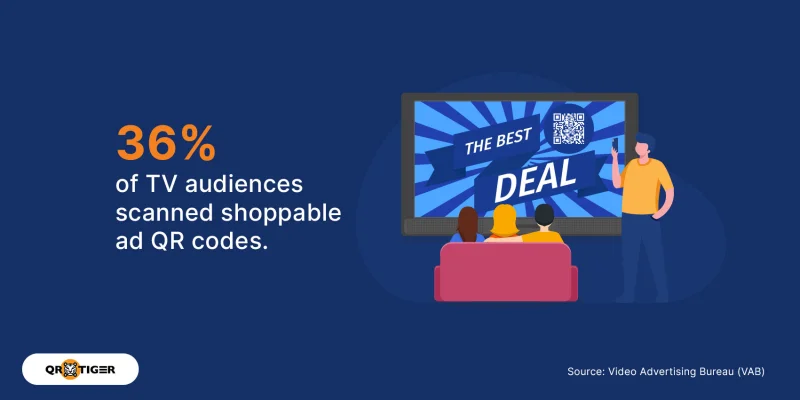
According to a recent survey by the Video Advertising Bureau (VAB), about a third of TV viewers have interacted with QR codes in ads, which often leads them to make a purchase, as noted by Aluma Insights.
Besides buying, many audiences also click on ads to receive information sent to their email or device, with two-thirds reporting that they've done so.
When asked about scanning QR codes from TV ads, Americans were about evenly split between those who have and haven't, and surprisingly, around five percent said they didn't know how to do it.
57% of consumers scan QR codes on food packaging
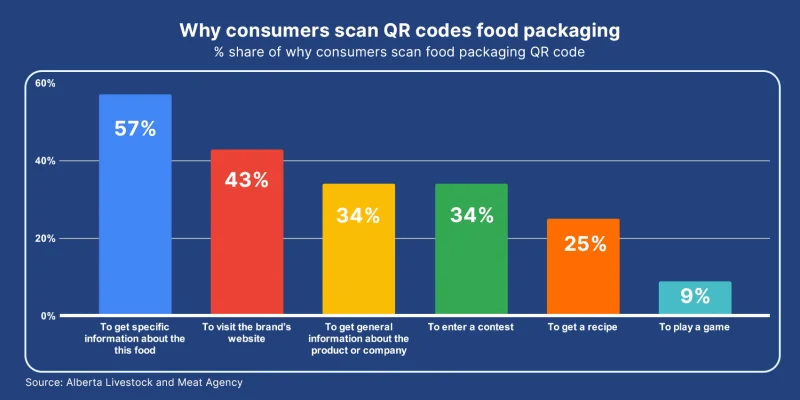
QR codes on food packaging are beneficial not only for consumers but also for businesses. More than half of Canadian consumers scan QR codes on packaging to get more specific food information.
These QR codes can also take users to a brand’s website, where they can find product or company information, view ads or promotions, and more.
Like Ecuador’s Ministry of Tourism, they put QR codes on export banana labels. When scanned, the codes lead to a video and a website inviting the scanner to visit Ecuador.
87% growth in QR code creation in the finance industry
Compared to the first half of 2022, the finance industry saw an 87% growth in QR code creation.
This tells us that more and more banks recognize the power of QR codes in facilitating quick, seamless, and secure transactions, which is why they’re transitioning to QR-smart banking transactions.
Since QR codes entered the finance industry, the banking experience has never been the same.
The booming industry of the QR payment market
The global QR code payment market was valued at $17.58 billion in 2025 and is expected to reach $41.04 billion in 2030.
This growth fueled the increase in smartphone penetration, driven by the COVID-19 pandemic. It offers a secure and hassle-free way to pay without physical contact.
The rise of global QR payment usage
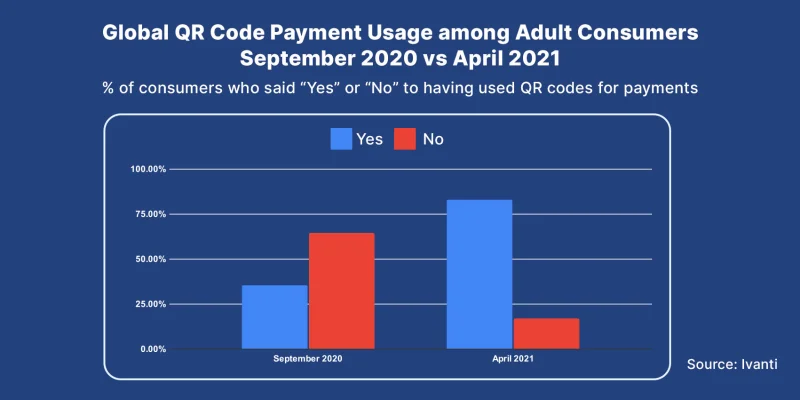
The payment method surged from 35.35% to 83% between September 2020 and April 2021.
The market is dominated by North America and the Asia-Pacific region, with China being a primary force due to the widespread adoption of platforms like Alipay and WeChat Pay.
North America has seen impressive progress, with QR code usage jumping by 11% during the pandemic.
Southeast Asia is at the forefront of QR code payment adoption
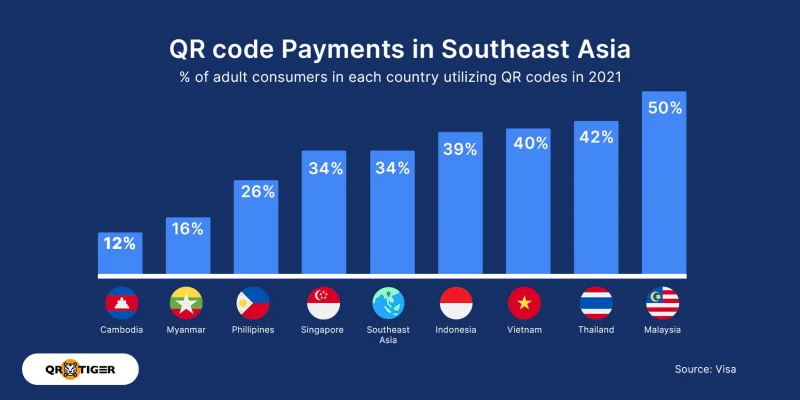
Sixty-nine percent of Southeast Asian consumers surveyed show interest in QR code-based payments in the coming years. Research indicates a significant rise in the volume of QR payments, with estimates predicting a 590% growth by 2028.
Visa states Thailand, Malaysia, Indonesia, Vietnam, and the Philippines are the five leading countries in Asia where QR adoption is widespread.
This paves the way for seamless cross-border digital payments, further boosting the system.
Convenience is a major driver behind the development of QR Payments
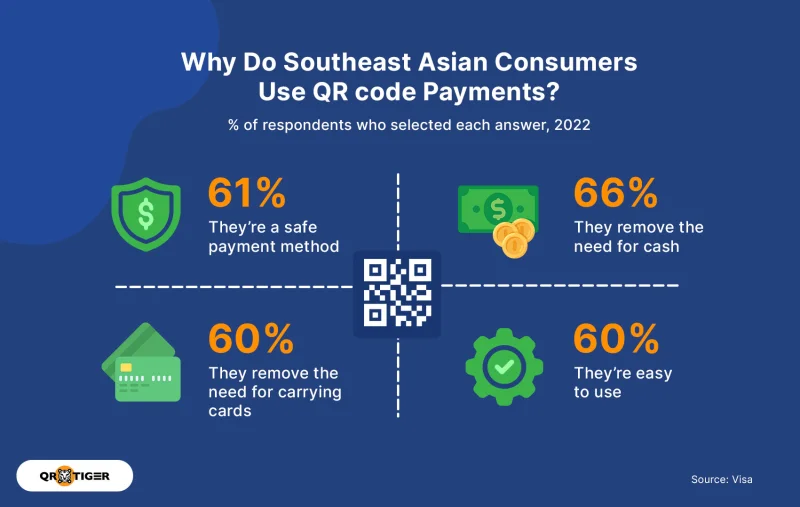
The main driver of QR codes in payment stems from their zero-contact transaction, especially in the pre-pandemic world, considering that it bypasses the need to carry cash and credit cards.
Consumers appreciate the ease of use and security of the QR code payment method. With a QR code scan, they are led to quicker checkout times, improved customer experience, and efficiency.
58% of US restaurants pivot to QR code menus
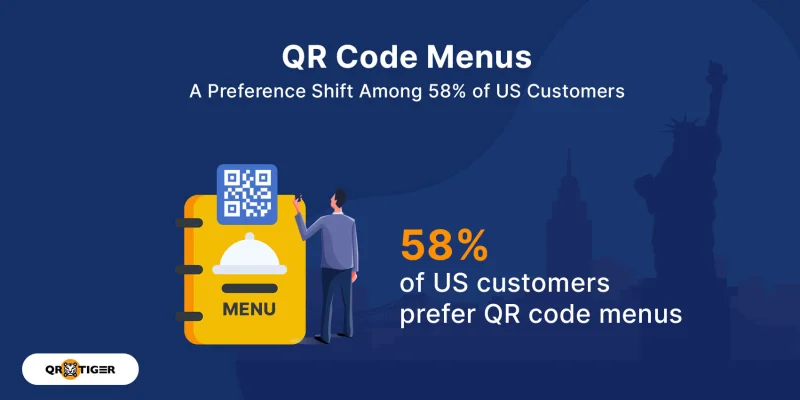
As restaurants had to deal with social distancing and COVID-19 rules, paperless menus became a lifesaver for many food establishment owners.
About half of the restaurants in the US started using them once they could open up with restrictions.
Some restaurants even let customers order straight from their phones using a QR code menu to make things easier and safer for everyone.
70% of US restaurants use QR codes for menu and payment
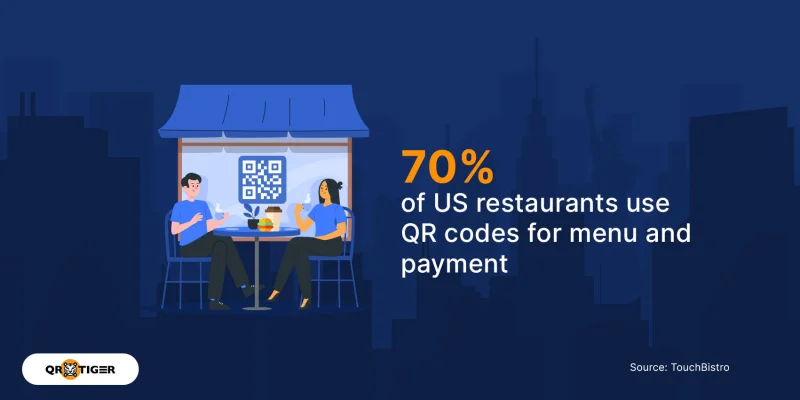
Here’s a fun fact: 7 in 10 US restaurants implement QR codes.
For most restaurants, they find QR codes as a smart solution to save money and be eco-friendly. These tiny codes help them achieve a seamless and touchless order-and-pay system.
58% of US customers prefer QR code menus
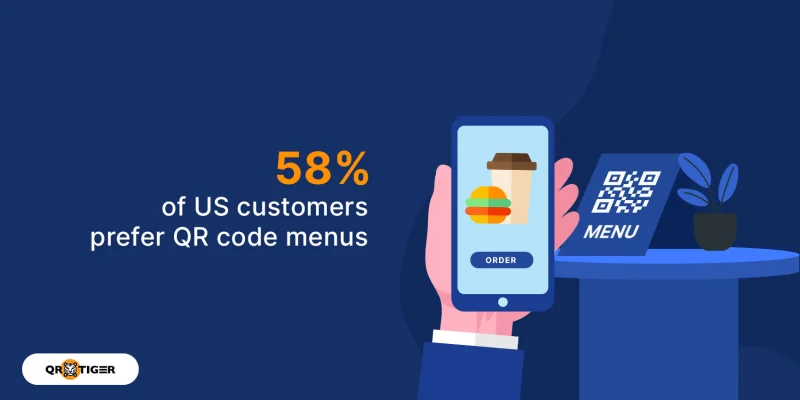
Surprisingly, more than half of US customers support QR code menus. According to TouchBistro, 58% of customers prefer to access the digital menu on their mobile phones.
This data suggests a trend towards digital convenience and mobile-first methods for accessing restaurant menus.
32% rise in QR code usage at national banks
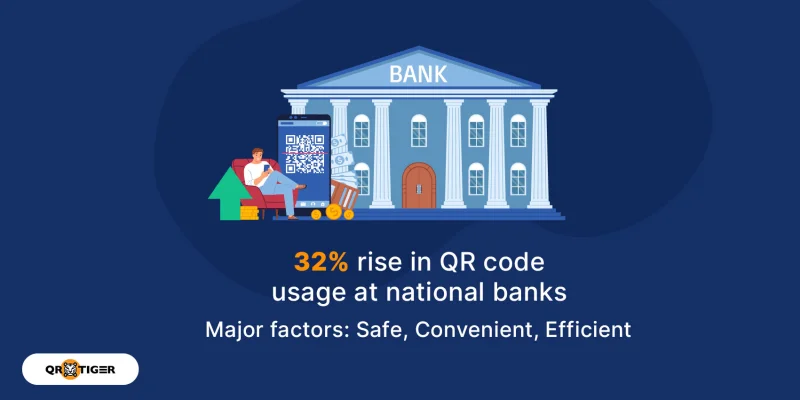
In 2021, national banks worldwide began using QR codes more frequently. It all boils down to three major factors — they’re safe, convenient, and an efficient alternative for an easier authentication system.
Let's take Capitec, a bank in South Africa, for instance. They launched Capitec Pay Me in late 2021. It lets customers make quick payments by scanning QR codes. And within a week, 2.5 million customers signed up to give it a try.
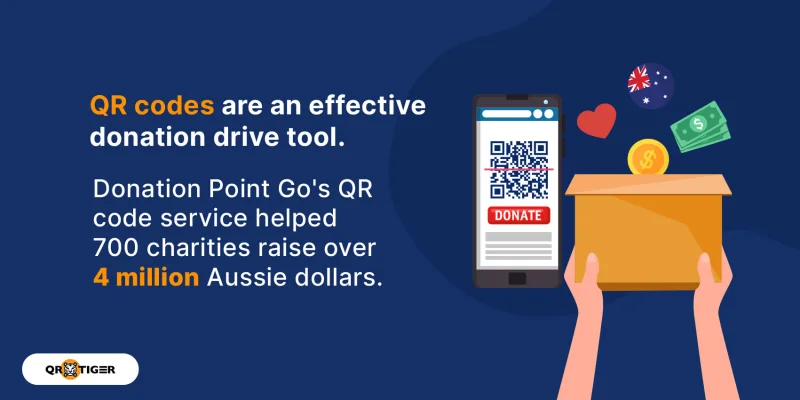
QR codes are an effective donation drive tool
COVID-19 hit charities hard, especially those that relied on face-to-face donations. After an initial boost, contributions dropped.
But here's the good news: QR codes came to the rescue.
They made donating a breeze by directing folks straight to online donation pages, cutting out the hassle.
In Australia, Donation Point Go's QR code service helped 700 charities raise over 4 million Aussie dollars, thanks to creative placements like volunteer shirts.
70% of hotels use QR codes for easier reservations
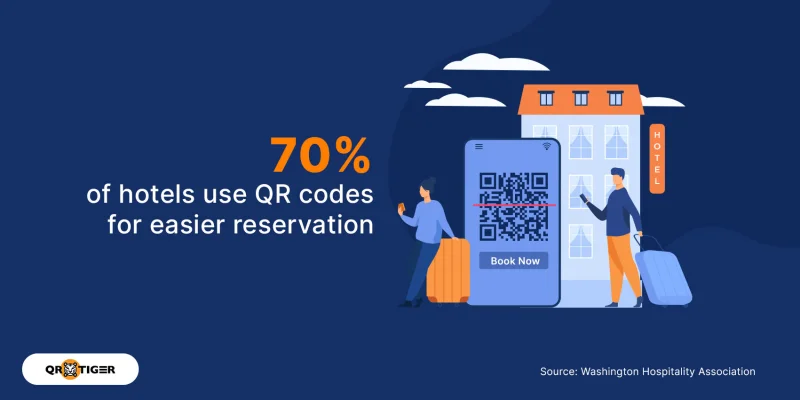
Hotels are increasingly using QR codes to simplify the lives of both guests and staff. According to the Washington Hospitality Association, 70% of hotels are already on board with this idea.
This means guests can breeze through check-in by scanning a code, skipping paperwork, and saving time.
Staff can quickly provide QR codes for items such as electronic forms and local information, making everyone's stay smoother and more enjoyable.
Part 6: QR code risks and challenges
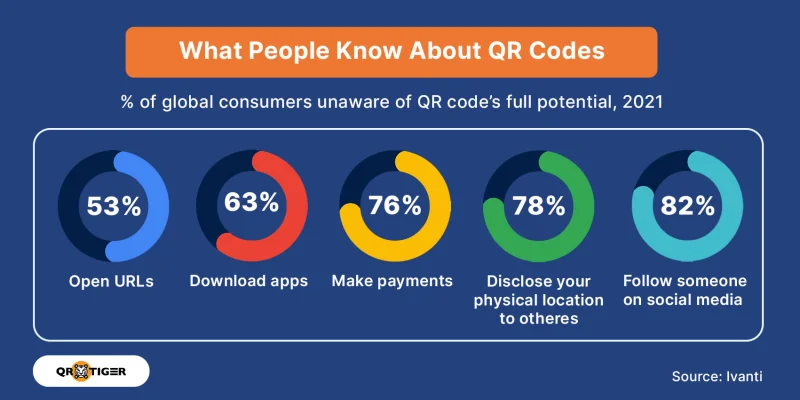
People are unaware of QR codes' full potential
Many people are still clueless about what they can do in the ever-expanding digital landscape. This blissful ignorance could be a chance for hackers to make a move.
An interesting finding from Ivanti’s survey revealed the following statistics:
- 53% know QR codes can store links and open websites
- 63% know QR codes' capabilities for downloading apps
- 76% know they can use QR codes for payment transactions
- 78% say QR codes can disclose physical location
- 82% know they can use QR codes to follow someone on social media
By educating and practicing safe scanning habits, we can turn QR codes cyber risk-free for everybody.
Why people don’t scan TV ad QR codes
A recent survey of US consumers revealed why many people hesitate to scan QR codes in TV ads, highlighting challenges for marketers.
One significant reason is that 20% of viewers say the QR codes distract them from the ad itself, highlighting a problem with their use.
To make QR codes work better on TV, marketers could make them more prominent in the ad or show them after viewers have seen the main content.
Quishing attacks surged 587% in 2023 and keep climbing
QR code phishing, known as quishing, is growing fast.
Keepnet Labs measured a 587% rise in quishing incidents in 2023. By 2025, QR codes appeared in roughly 12% of all phishing attacks globally, up from 0.8% in 2021. That's a structural shift in how attackers operate.
Microsoft Threat Intelligence reported 18.7 million QR code phishing attempts in March 2026 alone, marking a 146% jump from the previous quarter.
These numbers highlight the importance of heightened awareness, cybersecurity measures, and user vigilance. Palo Alto Networks' Unit 42 telemetry averages more than 11,000 malicious QR detections per day.
Eighteen percent of quishing attacks target online banking pages, and 89.3% aim to steal credentials like usernames and passwords.
Here's something to consider: 73% of Americans scan QR codes without verification, according to NordVPN/CNBC. This is why using fully customized or branded QR codes with a logo matters. It builds trust and helps users distinguish genuine codes from malicious ones.
Only 39% of consumers can identify malicious QR codes
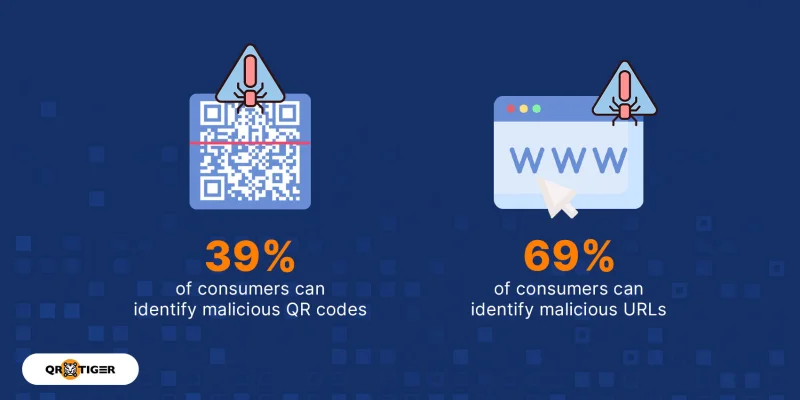
Based on a 2021 study conducted by Ivanti, about 39% of consumers can identify malicious QR codes. This low number indicates a need for greater awareness of QR code technology, particularly regarding QR code risks and security.
The percentage share suggests that most consumers are vulnerable to quishing (QR code phishing) and other QR code scams or cyber threats.
4 out of 5 top results for Bitcoin QR code generators were scams in 2019
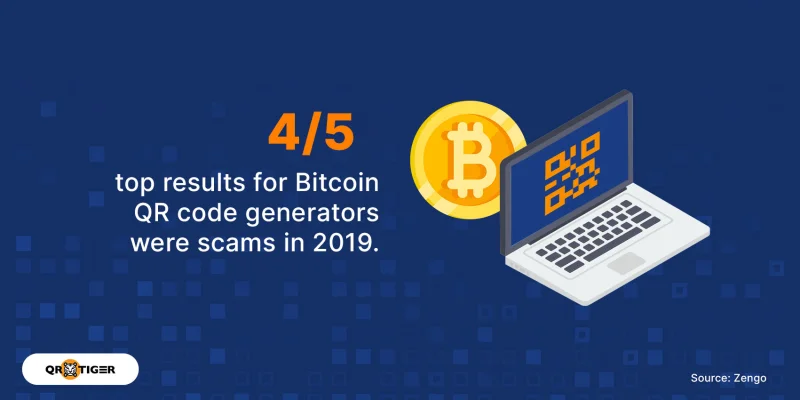
In 2019, Zengo Wallet conducted research on QR code generators. Their research revealed that four out of five top Google results for “Bitcoin QR code generators” were scams.
We can hardly deny that it’s quite high, indicating a high prevalence of fraudulent activities within the market.
This highlights a significant risk associated with the Bitcoin QR code during 2019, including financial losses and user data breaches.
36% of German consumers have scanned suspicious QR codes
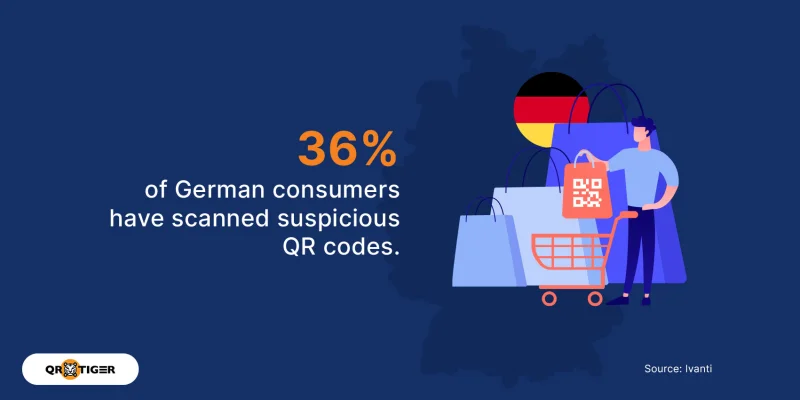
A survey conducted in Germany revealed that 36% of consumers have scanned suspicious QR codes. Hence, more than a quarter of consumers are vulnerable to QR code scams or cyber threats.
Although 51% of the respondents claim that they can recognize malicious codes, the high prevalence of falling victim indicates that distinguishing genuine QR codes from malicious ones remains challenging.
This is also the reason why it’s better to use fully customized or branded QR codes with a logo.
Part 7: QR codes in the future
QR codes are a must-have tool in e-commerce
QR codes started in Asia and have been big for contactless payments there, like in China and Singapore.
If you're a Western company looking to grow in Asian markets, you'd better get started with QR codes. Chuck Huang, CEO of Citron, says if you don't, you could miss out on 80% of your customers. That’s a lot of loss there.
Global spending through QR code payments will reach over $8 trillion by 2029
Juniper Research reports that global spending through QR code payments will reach over $8 trillion by 2029, up by 50 percent from $5.4 trillion in 2025.
This growth reflects varying trends in QR code usage by country, driven by efforts to promote financial inclusion in developing regions and innovation in alternative payment methods in developed areas.
The QR smart packaging market will grow to $76.46 billion by 2032
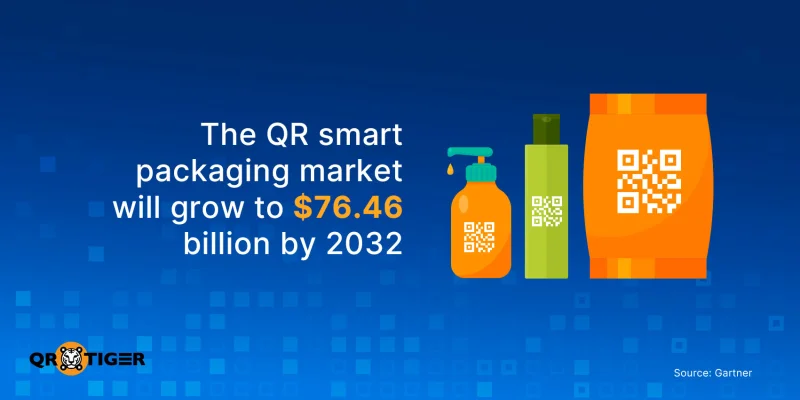
Today, consumers are increasingly demanding transparency in products, particularly in the food and cosmetics industries. And QR codes are the smartest yet cost-saving solution to achieve this and meet their demands.
For interactive and smart packaging, dynamic QR codes can do the trick.
These codes allow businesses to share a lot of information without cluttering the primary packaging with details.
That's why a report from Research and Markets found that the smart packaging market is expected to grow to $76.46 billion by 2032, up from $49.47 billion.
GS1 Sunrise 2027: QR codes at every retail checkout
Here's a development that will reshape retail. GS1 Sunrise 2027 is a global initiative that requires retail point-of-sale systems worldwide to read and process 2D barcodes, including QR codes, by the end of 2027.
This is the largest coordinated change to retail identification since the original UPC barcode was scanned at a supermarket in 1974.
Major brands, including Coca-Cola, L'Oreal, Nestle, P&G, and Mondelez International, have signed on to the initiative. The traditional 12-digit barcode will coexist with GS1 Digital Link QR codes that carry far more data: product origin, batch numbers, expiry dates, and even consumer-facing content.
QR TIGER's survey supports this shift. About 63% of consumers view the transition to GS1 Digital Link positively. Another 52% support replacing printed URLs with QR codes on product packaging.
For businesses, the takeaway is clear: preparation should start now, not at the deadline.
A promise of future growth in market value with QR code payment
QR codes are unlikely to become obsolete in the near future. Industries have witnessed the efficiency and accessibility behind this advanced tool, notably in digital payments.
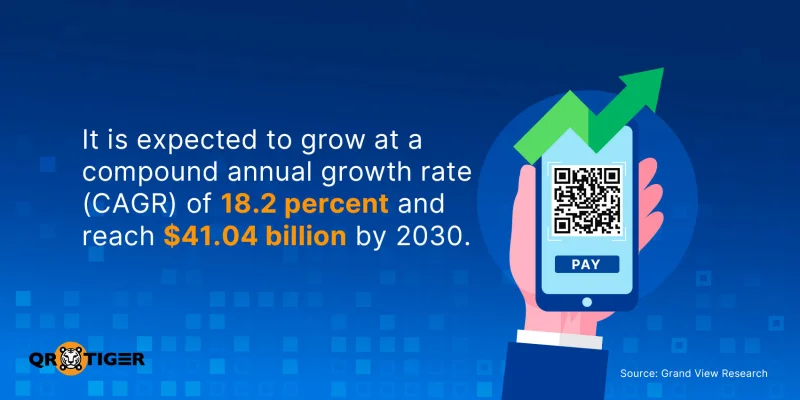
The market value of QR code payments is projected to experience significant growth. It is expected to grow at a compound annual growth rate (CAGR) of 18.2% and reach $41.04 billion by 2030.
This Research and Markets report proves the future of QR codes is bright.
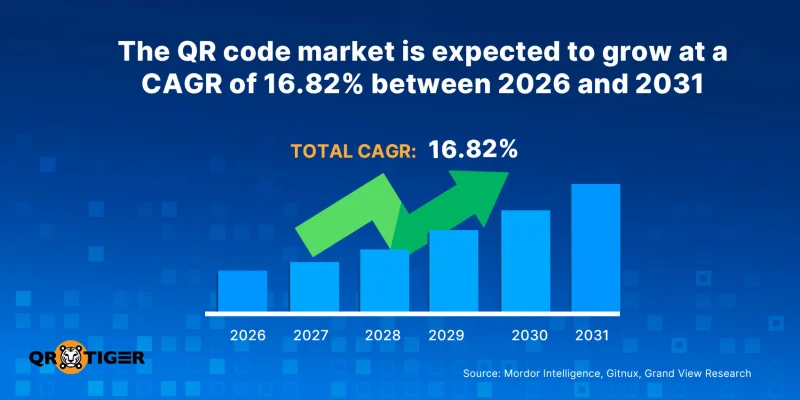
The QR code market is expected to grow at a CAGR of 16.82% between 2026 and 2031
The QR code market was valued at $1.18 billion in 2021. From 2021 to 2028, this figure is expected to grow at a compound annual growth rate of 23.7%.
However, a new report from Mordor Intelligence is showing a significant change in the QR code market projections. According to the report, the market will reach $33.14 billion by 2031, with a CAGR of 16.82%.
In 2026, it was already valued at $15.23 billion, representing a significant leap from $1.18 billion in 2021.
In essence, these numbers clearly indicate a significant upward trend in QR code usage and market value. It highlights their dominance in various industries and applications.
Incorporation of the blockchain with QR codes
Security is important to ensuring the safety of QR code users, particularly in QR-based financial transactions. This is why, according to 6Wresearch, an emerging development in the market is the adoption of blockchain technology in conjunction with 2D barcodes.
Thanks to the blockchain’s decentralization, integrating the technology with QR codes adds another layer of trust to an already effective tool.
An ACM's Digital Threats: Research and Practice study developed a system that combines the two technologies, with digital credentials in a blockchain being tagged using QR codes as a means of dual credential verification.
QR codes will continue to grow, says QR code expert
Long story short: QR codes continue to grow in popularity.
The flexible nature of QR technology has led to many innovations that streamline daily transactions, which is why enterprises now use it to upgrade their services.
Claeys, QR TIGER's founder and CEO, believes that the pandemic may have accelerated QR code growth, but it’s not the sole reason for the company’s current popularity.
“I do believe QR codes always had a great potential,” Claeys says. “People now see how beneficial and versatile QR codes are and actually start using them.”
For example, restaurants are now opting for interactive restaurant menu QR code software to replace physical menus, prioritizing diners’ health and convenience.
Merchants and stores use cashless payment options through QR codes.
Furthermore, QR codes have grown in functionality today, making them more useful and effective in marketing campaigns.
As of 2022, there are about 6.93 billion smartphone users worldwide, with 5.60 billion “unique” users.
Why are QR codes popular?
QR codes are popular for many reasons. Here are some of them:
Efficiency powerhouse
Manual data entry is prone to errors and delays. Now, a swift and simple scan can bring a multitude of information to your devices.
A QR code’s ability to connect the physical and digital worlds creates a streamlined user experience, enhances data collection, and optimizes workflow for businesses in many ways.
It enables richer information sharing and eliminates the need for lengthy and cluttered printed messages.
Enduring effectiveness
The effectiveness of QR codes extends far beyond marketing and advertising. They can also be used in product authentication, logistics, contactless payments, ticketing systems, and even in educational settings.
This proves them as a valuable tool across various industries.
Cutting costs
QR codes are a powerful tool for businesses seeking ways to optimize costs and streamline operations.
It eliminates the need for paper-based marketing materials, enhances inventory management, refines operations and data collection, enables content editing, and simultaneously improves the customer experience through a single QR code.
Easy to use
QR codes prioritize user experience by offering an intuitive and navigable way to access information.
Accessing a QR code typically leads to a specific predefined action, such as opening a website or launching an app. Their clarity of purpose minimizes user confusion and ensures an immediate understanding of how QR codes work.
Versatility
A QR code's remarkable versatility lies in its ability to house a wide range of data in different types while remaining compact and easily accessible.
Their inherent functionality, ease of use, and integration into other existing technologies make them a practical tool for businesses of all sizes.
How top brands are using QR codes today
The Hershey Company
The Hershey Company launched a sweet surprise for its Kisses chocolate consumers using QR codes.
To make gift-giving extra special and hassle-free during the holiday rush, they added dual QR codes on their Kisses chocolate packaging using the QR TIGER QR Code Generator.
The first QR code allows the giver to record a personal video message, add filters, and store it on the QR code. The second QR code allows the receiver to access and view the video message.
The colorful Hershey’s QR code displayed its versatility, allowing the CPG industry to make its packaging fun, engaging, and interactive.
Mountain Dew
Even the popular soft drink brand could not skip using QR codes for its campaign.
In partnership with Mobile Legends: Bang Bang, they added a unique QR code to their MLBB-themed bottle packaging.
Once the Mountain Dew QR code is scanned, they can claim prizes such as 20 to 10,000 free MLBB diamonds, merch, gadgets, and more.
It is indeed clever marketing with QR codes.
Skechers
Skechers is stepping into the future of recruitment with its innovative use of QR codes.
The company has taken a fresh approach to job ads, adding its branded Sketchers QR code to recruitment postings.
Job seekers simply scan the code to access the full list of vacancies and detailed job descriptions, and even track their application status.
This seamless, mobile-friendly experience makes applying for a job with Skechers as easy as taking a step forward.
It’s a smart way to attract top talent while making hiring more efficient and accessible.
Nike
Nike has also been pushing the boundaries of QR code marketing with creative campaigns that merge technology with shopping.
One of their standout strategies includes placing QR codes on mannequins and apparel, allowing customers to scan and view product details, sizes, and colors directly on their smartphones.
They also offer personalized QR codes on shoes, allowing customers to customize designs.
These creative strategies demonstrate how Nike utilizes QR codes to provide a more engaging and interactive shopping experience.
L’Oréal
L’Oréal Paris is making its print ads interactive by incorporating QR codes, which offer a new level of engagement for its audience.
In its campaign featured in Allure magazine, the cosmetic company placed QR codes that lead readers to a mobile landing page showcasing its Youth Code products.
This approach blends beauty and technology to enhance consumer interaction and drive sales.
Starbucks
Starbucks brewed up a clever use of QR codes to connect coffee enthusiasts with engaging digital experiences.
QR codes are featured across various platforms, from in-store signage to outdoor ads in major cities.
Customers can scan these codes to explore Starbucks’ offerings, including a video about Caffe Verona, pairing recommendations, and a detailed menu.
The codes also allow users to locate nearby stores, check their card balances, and shop online—all from the convenience of their smartphones.
Tesco
Tesco has innovatively integrated QR codes into the shopping experience to cater to busy consumers.
In South Korea, a virtual store was launched at subway stations, allowing shoppers to scan product QR codes while waiting for their train.
These scanned items are automatically added to their Tesco app cart, streamlining the shopping process and providing customers with a convenient, on-the-go solution.
IKEA
Another top company that is embracing QR code innovation is IKEA. The furniture giant has redefined the in-store shopping experience by integrating QR codes into its mobile app.
Customers can scan product QR codes to view details, track purchases, and seamlessly check out.
This system streamlines the buying process and removes the heavy queue at counter checkouts.
With receipts saved digitally, IKEA offers a customer-first approach that’s both efficient and engaging, setting a high standard for modern retail.
How does the world use QR codes today?
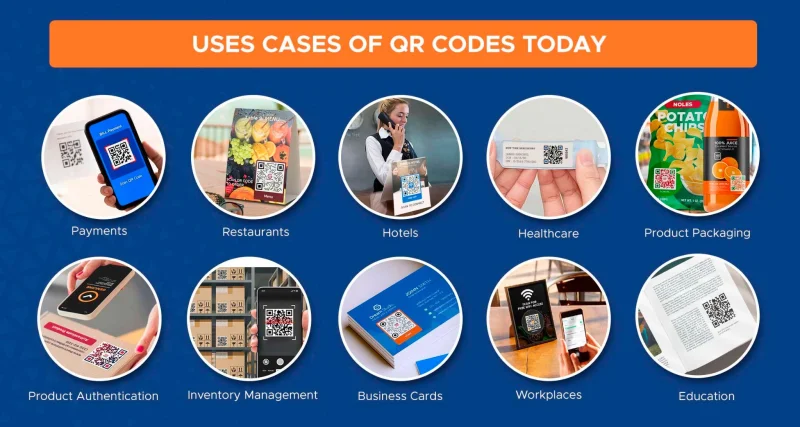
Since the pandemic, QR codes have become more functional and are used for various purposes across several industries. Here are some of today’s QR code trends:
1. Payments
Establishments and retailers have adopted QR codes for payments to facilitate cashless and contactless transactions.
Furthermore, digital wallet apps today allow users to connect their bank accounts.
These apps feature a scan-to-pay function, offering users a quick and seamless payment method.
A new study by Juniper Research reveals that global spending through QR code payments will reach over $8 trillion by 2029, up by 50% from $5.4 trillion in 2025.
This growth reflects varying trends in QR code usage by country, driven by efforts to promote financial inclusion in developing regions and innovation in alternative payment methods in developed areas.
2. Restaurants
Many restaurants switched to menu QR codes after the pandemic for a contactless dining experience.
In an article by CNBC, restaurant tech experts believe that QR codes can unlock more innovations to enhance the services delivered by restaurants, such as using a QR code for placing orders.
Square’s report on the Future of Restaurants also reveals that 88% of restaurants considered switching to digital menus.
Meanwhile, Hospitality Tech’s report on restaurant technology shows that 92% of restaurants have used QR codes as an alternative to physical menus.
Claeys, who also recently launched MENU TIGER, shares: “We’ve already seen several countries that have interactive menus where people can actually click on items, order them, pay them, and get them delivered to their table.”
“This was the solution lying there, and we needed to enter that space because many customers had already come to us for that solution.”
“We took a step further and actually made an interactive menu QR code system that can be linked to a point of sales system and everything else they have within their restaurant,” he continues.
3. Hotels
Reopened after the pandemic, they continued to use QR codes, which are now also used to streamline their services.
Most hotels now feature QR codes for check-ins, room reservations, customer feedback, and advertisements.
They can also create a Wi-Fi QR code, so their guests no longer have to type in long and complicated passwords to gain internet access.
4. Healthcare
The healthcare sector adopted QR codes during the COVID-19 pandemic.
QR codes became tools for speeding up the contact tracing process.
Establishments also used QR codes for health declaration forms and questionnaires that customers were required to complete before entering.
Now, QR codes are used on vaccination cards as a security and authentication feature.
5. Product packaging
Product manufacturers now incorporate QR codes on their packaging and labels to direct consumers to relevant details, such as nutritional content and precautions for allergic reactions.
A QR code can contain instructional videos and product manuals for DIY products, appliances, and gadgets. With a single scan, consumers can access these guides directly on their smartphones.
Management can also set up a QR code that allows clients to easily schedule an appointment.
To date, an increasing number of companies and brands are incorporating a dynamic QR code generator into their modern marketing strategies.
6. Product authentication
QR codes can store product details and features that prove their authenticity.
Many brands have adopted QR codes for product authentication to combat the alarming rise of counterfeit goods on the market.
Aside from the manufacturing and CPG industries, more sectors are embracing QR code technology, leading to a surge in QR code adoption.
7. Inventory management
QR codes on products can speed up and ease inventory management.
The great thing about QR codes is that staff only need a smartphone to scan them, eliminating the need to purchase bulky barcode scanners.
8. Business cards
QR codes leverage business cards by adding a digital aspect to the plain printed card using a digital business card solution.
As you hand out business cards to people, they can simply scan the code to see more of your details and credentials.
9. Workplaces
Office spaces now use QR codes to record attendance seamlessly, quickly identify employees, and share files conveniently.
10. Education
QR codes have become extremely helpful in the education sector with the shift to distance learning and online classes, which helps keep students and teachers safe.
Now that schools are open, these tech tools continue to be beneficial in various ways, from access to learning materials to classroom management.
QR codes in the news
In 2026, QR codes made the headlines on numerous occasions.
“It’s a growing market, and I think it has huge potential. In the near future, I believe it will be mainstream in any country,” Claeys notes.
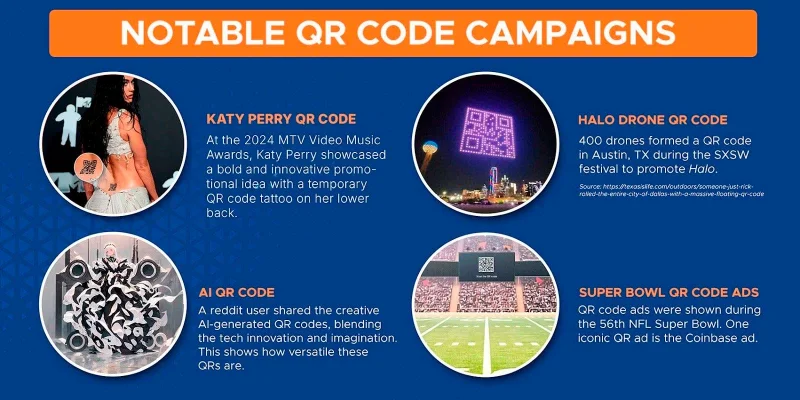
Here are some of the most noteworthy QR code campaigns and applications so far:
1. Katy Perry’s QR code tattoo
Katy Perry left her fans and audience totally flabbergasted with her QR code tattoo during the 2024 MTV Video Music Awards (VMAs).
QR code tattoos aren’t new, but the way these tiny pixels can hold various information is what sparks curiosity.
Once scanned using a smartphone, the QR code directs users to a special page featuring her new album. Undoubtedly, it was a subtle yet brilliant marketing move to promote her upcoming album.
2. Anime-inspired AI QR codes
A Reddit user shared a set of creative anime-inspired QR codes, showing how these tiny pixels can do more than store information. They can also be a creative art statement.
At first glance, they appear to be art portraits. But once you scan them using your smartphone, they will instantly lead you to the stored landing page.
Powered by Stable Diffusion AI and ControlNet, these AI-generated QR codes displayed how far QR code technology can go.
3. ‘Halo’ drone QR code
During the South by Southwest (SXSW) Festival in Austin, Texas, 400 drones formed a gigantic QR code in the dusk sky to promote the upcoming Paramount+ original sci-fi series Halo.
When people scanned the code, a trailer for the show appeared on their smartphones.
It piqued people’s curiosity and their interest in the new show.
4. Super Bowl QR code ads
The 56th NFL Super Bowl was filled with iconic and influential QR code commercials.
One example is Coinbase’s 60-second ad featuring a QR code floating on a blank screen, which is reminiscent of the iconic DVD screensaver from the 1990s.
Home viewers who scanned the code were directed to Coinbase’s time-limited promotion: new users would receive $15 worth of Bitcoin for free, and customers could participate in a $3 million giveaway.
Their website experienced a surge in traffic in a short span of time, which resulted in a temporary app crash.
How long will QR codes stay relevant?
So, to answer the question: are QR codes dead, or will they remain as popular in the coming years?
The QR code usage statistics demonstrate the code’s continued popularity, even though it has been several years since the COVID-19 pandemic.
They continue to prove to be useful in streamlining daily transactions.
They also offer a great opportunity from offline to online marketing campaigns.
Claeys sees that this trend will continue to grow. “I believe it’s the goal of marketers to connect their target audience with their advertising,” he says.
“They would then have to make their QR codes engaging enough for people actually to look and scan them, and I think there are a lot of opportunities within that space.”
Questions people ask about QR codes
Do people use QR codes anymore?
Yes. QR TIGER's 2026 data shows global scans reached 130.12 million, a 211.5% increase from 2024. About 47% of users scan QR codes daily or several times a week, per QR TIGER's QR Decoded 2026 survey.
What percentage of people use QR codes?
An estimated 102.6 million smartphone users in the US scan QR codes in 2026, per eMarketer. Globally, QR code scans surged 57% across 50 countries.
What are today's QR code trends?
QR code usage continues growing in marketing, education, events, and e-commerce. GS1 Sunrise 2027 will require retail POS systems worldwide to read 2D barcodes, including QR codes, by the end of 2027.
What are five common uses of QR codes?
Based on QR TIGER's QR Decoded 2026 survey, the top five are restaurant menus (55%), payments (44%), product information (40%), app downloads (38%), and Wi-Fi access (34%).
Do Gen Z like QR codes?
Yes. Gen Z shows the highest adoption rate at 83%. Team Lewis Research reports that 49% of Gen Z consumers use QR codes at least once a week.
What are the risks of scanning QR codes?
Quishing (QR code phishing) is the biggest risk. Keepnet Labs measured a 587% rise in quishing incidents in 2023. By 2025, QR codes appeared in roughly 12% of all phishing attacks globally.
Where should you not use QR codes?
QR TIGER's QR Decoded 2026 survey found that 53% of users skip scanning in emails or messages, 47% avoid public bathrooms, and 46% skip random flyers or posters.
What is replacing barcodes?
QR codes. GS1 Sunrise 2027 requires retail POS systems worldwide to read and process 2D barcodes by the end of 2027. Coca-Cola, L'Oreal, Nestle, and P&G have all signed on.
The future of QR codes
Insider Intelligence found in a June 2021 survey that 75% of respondents are willing to use more QR codes in the future.
This can contribute to an increase in QR code usage statistics in the future.
Claeys believes that the popularity of QR codes will remain. “QR codes will be everywhere; they are a trend that will not stop anytime soon,” he adds.
He also suggests that more companies use QR codes. “They are a low-energy tool. You can print one and paste it somewhere strategic. They are also cost-effective.”
“In addition, the number of leads you can generate through it is huge if you use it wisely. It is important to put a call to action under your QR code to get more scans.”
The QR TIGER CEO also sees new industries entering the space of QR codes, such as NFTs. “QR codes and NFTs seem to be a great match; a lovely marriage.”
“I also see more use cases for QR codes in 2026 and the coming years. I think the QR code is the bridge today between the offline world and the mobile phone,” Claeys concludes.